 info@amzakinstruments.com
 +92 314 4662122


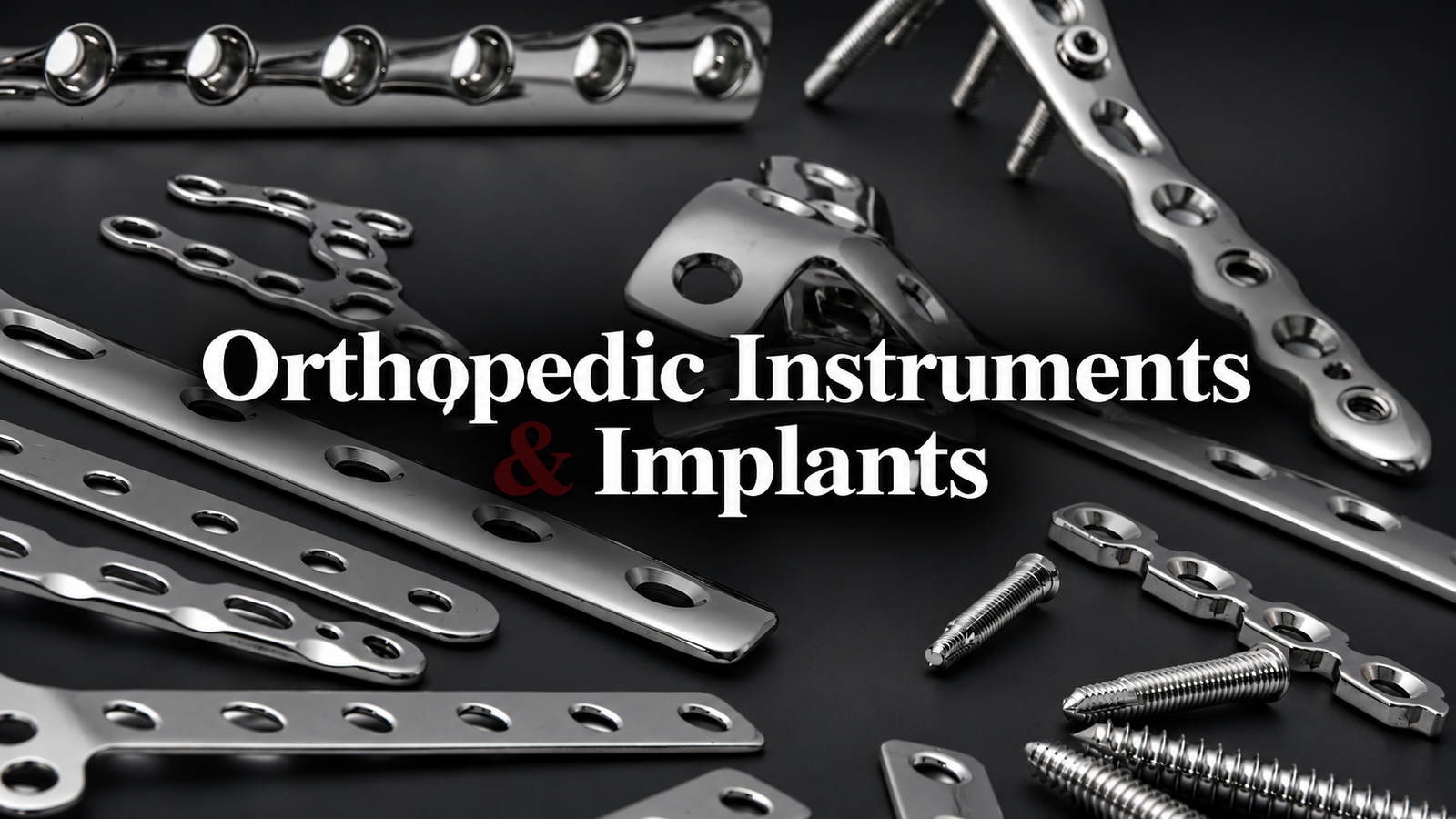
Orthopedic surgery focuses on diagnosing and treating conditions involving bones, joints, ligaments, tendons, and other structures of the musculoskeletal system. Specialized orthopedic instruments and implants play an important role in supporting surgical procedures that address fractures, injuries, deformities, and certain joint conditions.
Modern orthopedic procedures require carefully selected instruments that provide appropriate access, control, and compatibility with the planned surgical technique.
At AM ZAK Surgical, we understand the importance of reliable orthopedic surgical equipment for healthcare professionals and medical equipment buyers.
Understanding Orthopedic Surgical Instruments
Orthopedic instruments are specially designed tools used during bone and joint procedures.
Unlike many general surgical instruments, orthopedic tools may need to withstand substantial mechanical forces while maintaining controlled handling and functional accuracy.
Different procedures require different instrument designs, dimensions, and configurations.
Common Types of Orthopedic Instruments
1. Bone Holding Forceps
Bone holding forceps are designed to grip and stabilize bone fragments during selected orthopedic procedures.
2. Bone Cutting Instruments
Bone cutters, rongeurs, and other specialized cutting tools are used in procedures involving bone preparation or removal.
3. Orthopedic Drills and Drill Guides
Appropriate drilling systems and guides assist with accurately positioned holes during procedures involving compatible fixation systems.
4. Bone Elevators
Bone elevators are used for controlled manipulation of bone or associated tissues in procedures where their use is indicated.
5. Orthopedic Retractors
Retractors provide surgical exposure by holding surrounding tissues aside during an operation.
6. Screwdrivers and Implant Instruments
Specialized screwdrivers and associated tools are used with compatible orthopedic fixation systems. Correct matching of components is essential.
What Are Orthopedic Implants?
Orthopedic implants are medical devices designed to remain in the body for a specified clinical purpose, either temporarily or permanently.
They may be used to stabilize fractures, support reconstruction, or replace certain damaged anatomical structures.
Common examples include:
- Bone Plates: Used with compatible fixation screws to help stabilize selected fractures.
- Bone Screws: Designed for fixation according to specific surgical and implant-system requirements.
- Intramedullary Nails: Used for internal fixation of certain long-bone fractures.
- Orthopedic Wires and Pins: Used in selected fixation procedures.
- Joint Replacement Components: Used in certain procedures involving damaged joints.
Implant selection is a clinical decision influenced by the patient’s condition, anatomy, and surgical plan.
Why Quality Is Important in Orthopedic Surgery
Material Performance
Orthopedic instruments and implants have different material requirements.
Reusable surgical tools often utilize suitable stainless steels, while implants may use specific medical-grade titanium alloys, stainless steels, or other validated implant materials.
Material specifications must be appropriate for the intended device and application.
Mechanical Reliability
Orthopedic procedures can involve significant forces. Instruments must be designed to function under their specified operating conditions.
Implants must meet the mechanical and biological requirements relevant to their intended use.
Accuracy and Compatibility
Orthopedic fixation systems often depend on precisely matched components.
Using compatible tools, screws, plates, and other components is essential for correct system operation.
Cleaning and Sterilization
Reusable orthopedic instruments require appropriate reprocessing according to their validated instructions.
Implants have their own specific packaging, sterility, storage, and handling requirements, which must be followed carefully.
How Orthopedic Instruments Support Surgical Procedures
Orthopedic instrument sets are organized around specific procedural needs.
A typical procedure may require instruments for surgical exposure, bone preparation, reduction, drilling, fixation, and closure.
The exact requirements depend on the procedure, surgeon’s technique, and selected implant system.
Having the correct instruments available and properly prepared helps surgical teams maintain an organized workflow.
Choosing Orthopedic Instruments and Implants
Professional buyers should evaluate products using clear technical and clinical criteria.
Important considerations include:
- Intended clinical application
- Exact dimensions and specifications
- Material identification
- Instrument and implant compatibility
- Applicable quality and regulatory documentation
- Packaging and sterility status
- Reprocessing instructions for reusable devices
- Traceability and labeling requirements
Medical organizations should also review relevant regulatory approvals or certifications where required.
Explore Orthopedic Solutions with AM ZAK Surgical
AM ZAK Surgical features an Orthopedic Instruments & Implants category for healthcare professionals, medical suppliers, and distributors seeking information about specialized orthopedic products.
Our product categories make it easier to explore equipment designed for different surgical disciplines.
Professional buyers can contact our team to discuss product availability, specifications, and relevant documentation.
Conclusion
Orthopedic instruments and implants are essential elements of modern musculoskeletal surgery.
Appropriate product selection, functional compatibility, and compliance with applicable quality requirements are critical considerations.
By understanding the different types of orthopedic instruments and fixation systems, healthcare buyers can make better-informed procurement decisions.
Explore Orthopedic Instruments & Implants at AM ZAK Surgical.
Contact Us:
Phone/WhatsApp: +92 314 4662122
Email: info@amzakinstruments.com